The Interplay Between HTTP/3 Adoption Patterns and Content Delivery Optimizations Within Video Streaming Infrastructures for Educational Platforms
Casey Wolf · Sep 30, 2026
The Interplay Between HTTP/3 Adoption Patterns and Content Delivery Optimizations Within Video Streaming Infrastructures for Educational Platforms
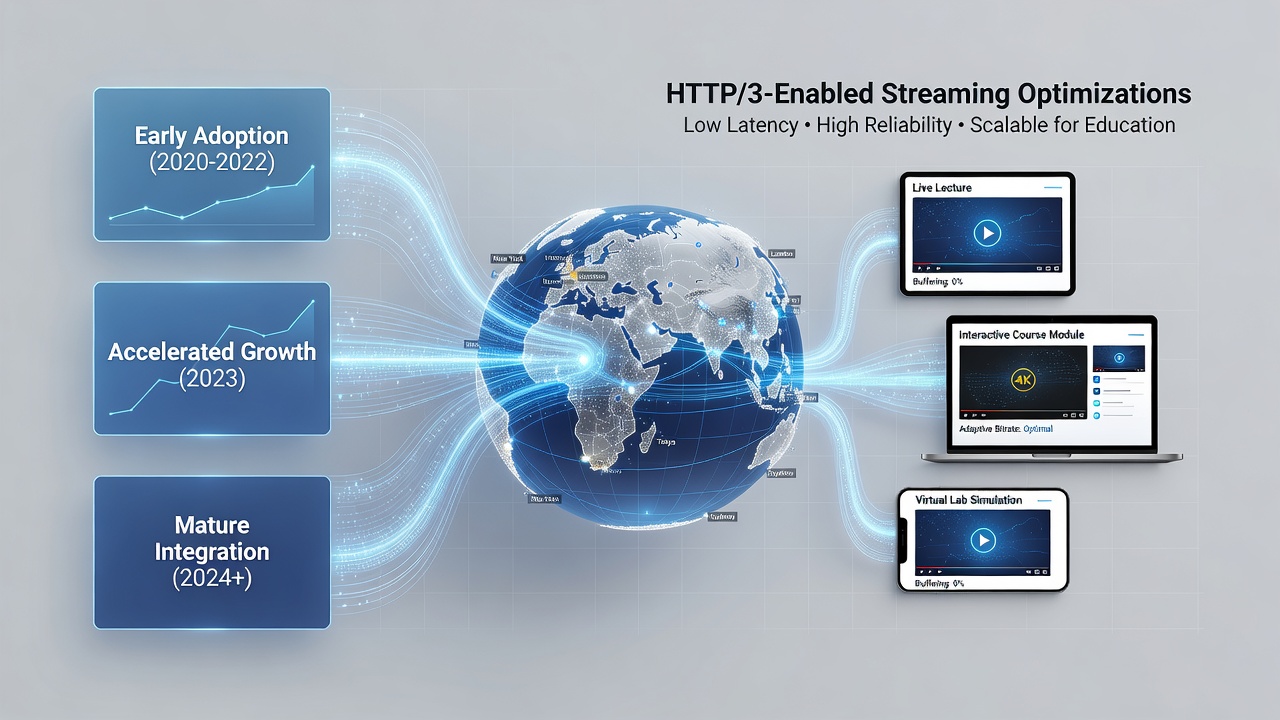
HTTP/3 has shifted how video delivery systems handle connection establishment and packet loss recovery, particularly in environments where learners access lectures across variable networks. Research from the IETF QUIC working group shows that the protocol replaces TCP with QUIC, which integrates TLS 1.3 and multiplexes streams without head-of-line blocking. Educational platforms have begun mapping these changes onto their content delivery networks to reduce startup delays during peak enrollment periods.
HTTP/3 Fundamentals in Streaming Contexts
QUIC operates over UDP and enables 0-RTT handshakes for repeat connections, a feature that matters when students resume paused sessions on mobile devices. Data collected by network measurement firms indicates that HTTP/3 adoption among content providers reached measurable thresholds by early 2025, with educational services following enterprise patterns rather than leading them. Observers note that the protocol's congestion control algorithms adapt faster to fluctuating bandwidth, which aligns with the bursty traffic typical of interactive course modules.
Adoption Patterns Across Educational Providers
Large platforms serving millions of concurrent viewers have rolled out HTTP/3 incrementally, starting with regions that already support QUIC at the ISP level. Studies published through academic consortia reveal that North American and European providers advanced faster than counterparts in parts of Asia and Africa, where legacy middleboxes still interfere with UDP traffic. By September 2026, several major learning management systems plan broader enablement after completing compatibility testing with older client libraries still used in institutional devices.
Content Delivery Network Adjustments for Video Workloads
CDNs have modified edge server configurations to prioritize QUIC streams for adaptive bitrate ladders, allowing smoother transitions between quality levels when network conditions shift mid-lecture. One documented case involved an Australian research network that integrated HTTP/3 routing rules into its origin shielding layer, cutting retransmission overhead for recorded seminars. These optimizations rely on real-time telemetry that feeds back into cache decision engines, ensuring popular segments remain available closer to end users.
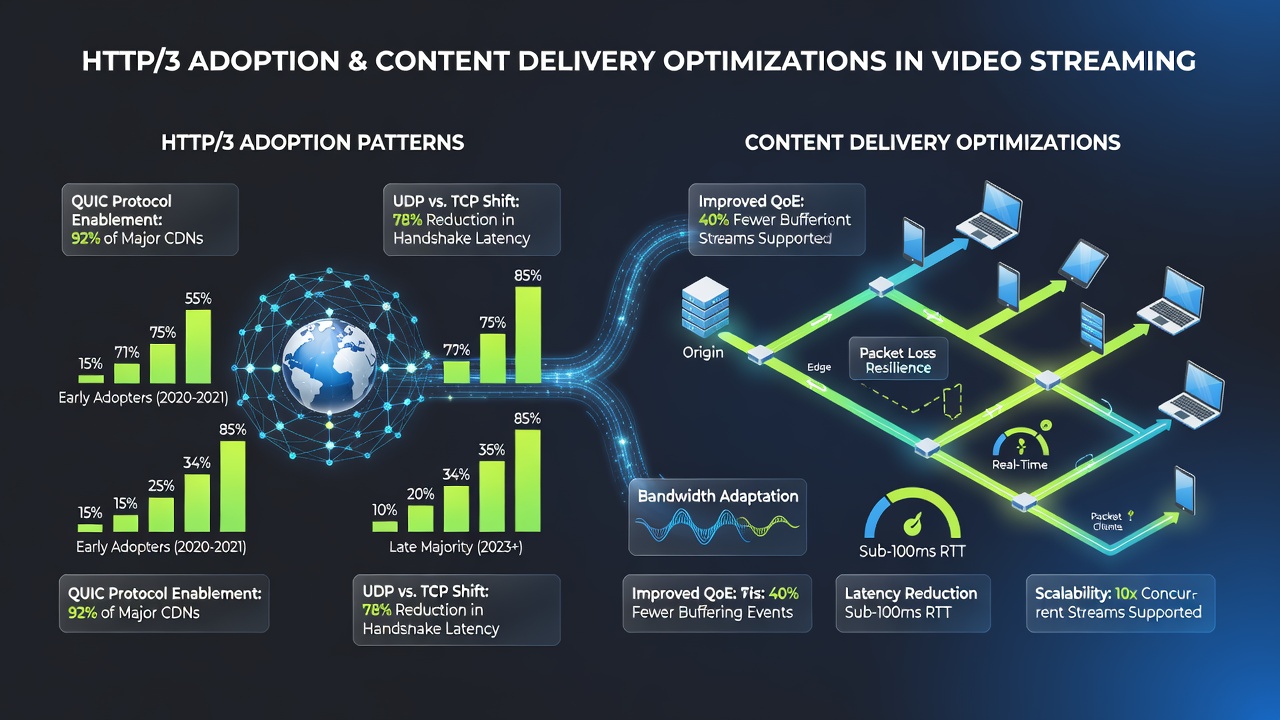
Operators have also adjusted origin pull policies to account for QUIC's connection migration capabilities, which preserve sessions when learners switch between Wi-Fi and cellular during commutes. Figures from industry reports indicate that such changes reduce rebuffering events by measurable percentages in controlled trials, though results vary with underlying infrastructure density.
Interplay Effects on Latency and Scalability
The combination of HTTP/3 and refined CDN logic produces compounding gains in environments where thousands of simultaneous streams compete for resources. Researchers at technical universities have measured lower tail latencies for first-segment delivery after both protocol and caching layers were updated together. Educational platforms benefit because course videos often contain predictable chapter structures that edge caches can pre-position once adoption thresholds are crossed.
Yet the transition introduces new variables around certificate management and UDP port filtering that security teams must address before full rollout. Data from European regulatory monitoring bodies shows gradual increases in QUIC traffic share within higher-education networks, correlating with improved viewer retention metrics during live webinars.
Practical Implementation Examples
One consortium of Canadian universities deployed a unified streaming backend that negotiates HTTP/3 where available and falls back gracefully, documenting consistent improvements in session duration across remote campuses. Another project in the Asia-Pacific region focused on integrating protocol-aware load balancers that route educational video requests based on client QUIC support signals. These efforts demonstrate how adoption patterns influence the timing and scope of delivery optimizations rather than occurring in isolation.
Looking Ahead to September 2026 and Beyond
Projections from research institutions suggest continued growth in dual-stack support, allowing platforms to maintain compatibility while shifting more traffic to HTTP/3. As client libraries mature and middlebox interference declines, the interplay between protocol features and CDN behaviors will likely tighten further, especially for platforms handling live interactive sessions alongside on-demand archives.
Conclusion
The documented relationship between HTTP/3 rollout and targeted content delivery refinements shows measurable impacts on video performance within educational infrastructures. Continued monitoring of adoption metrics alongside infrastructure updates will clarify how these elements evolve together through 2026 and subsequent years, according to ongoing studies from multiple technical and academic sources.